Who Does Dental Implants? Dentist vs Specialist
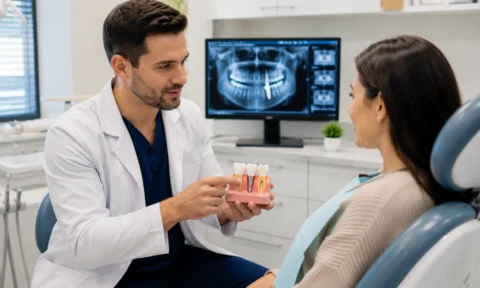
Dental implants may be placed by different types of dental professionals depending on treatment complexity, bone support, and overall oral health needs. Implant treatment often involves diagnosis, surgical planning, restoration placement, and long-term maintenance. At Dental Wellness, many patients begin with Dental Implants consultations because replacing missing teeth may require evaluating jaw support, bite function, gum health, and long-term treatment goals.
Quick Facts
What it is:
Dental implant treatment replaces missing tooth roots using titanium or zirconia posts designed to support crowns, bridges, or dentures.
Who it is for:
- Patients missing one tooth
- Patients missing multiple teeth
- Patients with unstable dentures
- Patients with previous tooth extractions
- Patients seeking long-term tooth replacement options
Main benefits:
- May restore chewing function
- May support jawbone stimulation
- May improve smile appearance
- May improve bite stability
- May help preserve neighboring teeth
Limitations:
- Treatment depends on bone condition
- Healing timelines vary
- Bone grafting may sometimes be required
- Certain medical conditions may affect candidacy
Timeline / durability:
Implant treatment often ranges from 3–9 months depending on healing response, implant integration, and whether preparatory procedures are needed.
Who Usually Performs Dental Implants?
Dental implant treatment may involve one provider or multiple dental professionals because implant care combines both surgical and restorative phases.
Providers who may participate include:
- General dentists with implant training
- Oral surgeons performing surgical procedures
- Periodontists managing gum and support structures
- Prosthodontists restoring replacement teeth
- Multi-disciplinary teams coordinating advanced treatment
For example, a patient replacing a single tooth with healthy bone support may complete treatment with one provider, while someone replacing several teeth with tissue loss may require coordinated specialist care.
How General Dentists May Perform Dental Implants
Many general dentists place and restore dental implants after receiving additional implant education and surgical training.
General dentists often provide:
- Implant consultations
- Treatment planning
- Single-tooth implant placement
- Crown restoration
- Long-term implant maintenance
For example, a patient replacing one molar with healthy jaw support may complete treatment within one dental practice.
Dental Wellness uses advanced imaging technology and digital planning tools to support implant evaluation and treatment planning.
How Oral Surgeons May Participate in Implant Treatment
Oral surgeons may become involved when implant procedures involve greater surgical complexity.
Situations may include:
- Severe bone loss
- Bone grafting procedures
- Multiple implant placement
- Full-arch reconstruction
- Impacted teeth removal
For example, patients with long-term tooth loss and reduced jawbone volume may require additional surgical preparation before implant placement begins.
How Periodontists Support Dental Implant Health
Periodontists focus on gum tissue and bone structures supporting natural teeth and implants.
Periodontal care may include:
- Gum disease treatment
- Tissue grafting
- Bone preservation
- Implant maintenance
- Soft tissue management
Healthy gum tissue and bone support may influence long-term implant stability and healing outcomes.
For example, patients with gum inflammation or recession may require periodontal treatment before implant placement proceeds.
How Prosthodontists Restore Implant Teeth
Prosthodontists focus on rebuilding appearance, chewing function, and bite balance after implant placement.
Restoration services may include:
- Implant crowns
- Implant bridges
- Implant-supported dentures
- Full-mouth reconstruction
- Bite rehabilitation
Patients replacing multiple missing teeth sometimes compare Dentures and Partial Dentures because replacement goals, stability needs, and long-term maintenance may differ.
What Determines Who Does Dental Implants?
The provider performing dental implant treatment often depends on oral health findings and treatment complexity.
Evaluation factors may include:
- Bone density
- Tooth location
- Number of missing teeth
- Existing gum disease
- Bite alignment
- Medical history
For example, a patient replacing one missing tooth may follow a different treatment pathway than someone replacing an entire dental arch.
Patients with extensive tooth loss sometimes explore All-on-4 treatment because full-arch replacement may involve different restorative planning and support needs.
Dental Implant Team vs Single Provider Care
Some implant cases may be completed by one provider, while others require coordinated treatment between multiple dental professionals.
Treatment approaches may include:
- Single-provider care for straightforward cases
- Team-based planning for advanced reconstruction
- Surgical referrals for grafting procedures
- Coordinated care for full-mouth restoration
For example, a patient with significant tissue loss may require imaging, grafting, implant placement, and restoration across multiple treatment phases.
How Technology Helps Dental Implant Planning
Modern dental technology may improve implant planning precision and treatment visualization.
Technology commonly used includes:
- Cone beam imaging
- Digital scanning
- Guided surgery systems
- 3D treatment planning
- Digital impressions
For example, providers may use cone beam imaging to evaluate jaw anatomy, bone volume, and implant positioning before surgery.
How Lifestyle Factors May Affect Implant Treatment
Certain habits and medical conditions may influence implant healing and long-term outcomes.
Factors commonly reviewed include:
- Smoking history
- Diabetes management
- Oral hygiene habits
- Medication use
- Teeth grinding patterns
- Overall health conditions
For example, smoking may affect blood flow and healing response following implant surgery.
Providers often evaluate these findings before recommending implant treatment pathways.
How Dental Implant Consultations Help Determine Treatment
Initial implant consultations help determine candidacy, treatment complexity, and restorative goals.
Consultations commonly include:
- Oral examination
- Imaging review
- Bone assessment
- Bite analysis
- Medical history evaluation
For example, a patient replacing one tooth may require a simpler consultation process than someone considering full-mouth reconstruction.
Consultations may also identify:
- Existing restorations
- Bite imbalance
- Tooth wear
- Tissue concerns
- Structural limitations
FAQ
Can a general dentist do dental implants?
Yes. Many general dentists place dental implants after receiving implant-specific training and continuing education.
Does an oral surgeon always do dental implants?
No. Oral surgeons may perform implants in complex surgical situations, but many implant procedures are completed by trained general dentists.
Who performs implants for severe bone loss?
Patients with advanced bone loss may receive treatment from oral surgeons or specialists trained in grafting and complex implant procedures.
Can one office complete the entire implant process?
Some practices provide implant consultation, surgery, restoration, and maintenance within one office, while others coordinate treatment with specialists.
How do dentists determine implant candidacy?
Dentists commonly evaluate imaging, bone support, gum condition, bite function, and medical history before recommending treatment.
What to Do Next
Missing teeth may affect chewing function, bite stability, jaw support, and surrounding oral structures over time. Delaying replacement may contribute to shifting teeth, uneven bite pressure, and changes in oral function.
If you are experiencing missing teeth, denture instability, or difficulty chewing comfortably, implant evaluation may help determine which treatment approach best fits your condition and long-term goals.
Dental Wellness can evaluate tooth replacement needs, explain available implant treatment options, and help determine which solution may best support your oral health goals. Patients may request a consultation to review oral health findings, discuss replacement options, and receive personalized treatment recommendations.